Israel Strikes Iran's South Pars Gas Field, Then Agrees to Hold Off
Netanyahu confirmed that Israel 'acted alone' in striking the world's largest natural gas reserves. Trump asked Israel to stop. For now, it has.
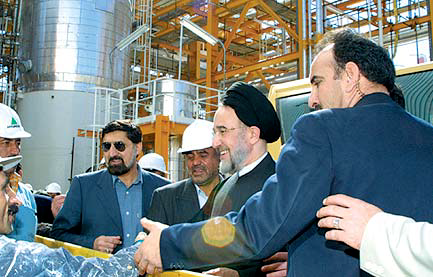
Israeli forces hit the Asaluyeh complex at Iran's South Pars gas field on Tuesday. Prime Minister Netanyahu confirmed Wednesday that Israel "acted alone" and that President Trump had subsequently asked Israel to stop targeting Iranian energy infrastructure. Israel agreed. For now.
The phrase "for now" matters. Netanyahu's public confirmation that Israel acted independently was itself a message. It establishes that Israel retains independent targeting authority and will exercise it when Israeli interests diverge from American preferences. The agreement to pause is framed as a concession, not a constraint. The difference is diplomatic, not operational.
The exchange reveals a crack in the U.S.-Israeli partnership that has been papered over since Operation Epic Fury began three weeks ago. Both countries want to degrade Iran. They disagree on how far that degradation should go and who bears the economic cost.
What South Pars Is
South Pars is not a military target. It is a natural gas field shared between Iran and Qatar, holding approximately 8 percent of the world's proven gas reserves and roughly half of Iran's total. The Asaluyeh complex on Iran's coast processes gas for domestic use and export. In dollar terms, it is the foundation of whatever economy Iran has left.
Israel's logic is straightforward. Iran's ability to fund its military, its proxies, and any future nuclear reconstitution depends on energy revenue. Destroying the military hardware while leaving the revenue base intact is a temporary fix. The hardware rebuilds if the money keeps flowing. From Jerusalem's perspective, South Pars is the most important target in Iran. Not because it kills soldiers, but because it kills the regime's capacity to regenerate.
Washington sees different math. Striking Iranian energy infrastructure does not just hurt Iran. It removes supply from a global market already in crisis. Brent crude hit $115 after the South Pars strike. Qatar declared force majeure on LNG exports after Iranian drone attacks on its own facilities, pulling roughly 20 percent of global LNG supply offline.
The United States can absorb expensive energy. Its allies in Asia and Europe cannot. Japan imports nearly all of its energy. South Korea is in the same position. European gas markets, still healing from the Russia-Ukraine disruption, cannot lose Qatari LNG without severe consequences. India and Pakistan face energy crises that threaten government stability.
Every dollar added to the oil price weakens the coalition that the United States needs to sustain the campaign. Israel's strike on South Pars, whatever its long-term strategic merit, made it harder for Washington to hold the partners together.
The Coalition Management Problem
Trump's request that Israel cease targeting energy infrastructure is not weakness. It is an acknowledgment that coalition warfare requires managing the pain tolerance of partners.
These countries have accepted the Iran campaign because its stated objectives (nuclear prevention, missile degradation, proxy disruption) align with their interests, even if they would not have chosen military action themselves. But there is a threshold beyond which the economic costs exceed the strategic benefits for countries that are not the United States or Israel. Systematically destroying Iranian energy infrastructure pushes toward that threshold.
The administration is trying to fight a war and manage a global energy crisis simultaneously. Israel is trying to fight a war and permanently defang a regional adversary. These are not the same project, and South Pars is where the difference became visible.
The Russian Oil License
On the same day Brent settled above $100, Trump issued a license allowing countries to temporarily purchase certain Russian oil products. The irony is not subtle. The administration that expanded sanctions on Russian energy to punish Moscow for invading Ukraine is easing those restrictions because its own military campaign has created a shortage that threatens the global economy.
The sanctions were designed to constrain Russian revenue. The license undermines that constraint. This is the price of a two-front strategic posture: pressure on Russia and war with Iran pull in opposite directions when both countries are major energy producers. Something bends. On this day, it was sanctions on Moscow.
The administration will call the license temporary and limited. Perhaps. But Moscow will pocket the revenue, and the precedent (that American sanctions flex when American military operations create market stress) will not be forgotten in capitals calculating how seriously to take future sanctions threats.
What This Means Going Forward
Netanyahu agreed to hold off. The agreement is voluntary, informal, and contingent on Israeli calculations about its own security. If the war continues into April and May, and if Iran begins reconstituting any of the capabilities Israel struck, the restraint will evaporate. Israel did not build the capacity to hit targets deep inside Iran in order to use it once and stop.
The deeper question is whether Washington can maintain a joint military campaign with a partner whose war aims exceed its own. The 1991 Gulf War succeeded partly because the coalition's objectives were rigid: liberate Kuwait, stop. The current campaign has no equivalent limit. American objectives are finite. Israeli objectives are open-ended. The gap between them will widen with every week the war continues.
South Pars was the warning shot. Not from Iran, but from Israel, aimed at Washington. The message: we will pursue our interests regardless of coalition management, and the price of restraining us is a concession you have not yet named.
The administration should name it. Before the next strike forces the question in a way that cannot be walked back.
Related Stories

The Tariff Truce Expires in October. Bessent Is Going to Beijing.
Treasury Secretary Scott Bessent will travel to Beijing in early June for working-level meetings on the trade truce, in the first cabinet-level American visit since the Iran war began.
May 18, 2026 · 7 min read

Netanyahu Convenes Security Cabinet After Muscat Collapse
Prime Minister Benjamin Netanyahu convened an emergency session of Israel's Security Cabinet on Saturday morning hours after Muscat Round 3 ended without agreement, in a meeting Israeli officials described as a review of military options.
May 16, 2026 · 6 min read

Chinese Foreign Minister Arrives in Tehran on Unannounced Visit
Chinese Foreign Minister Wang Yi arrived in Tehran on Tuesday morning unannounced, the first cabinet-level Chinese visit to Iran since the U.S. naval blockade began on April 12.
May 12, 2026 · 6 min read