First AUKUS Submarine Transfer to Australia on Track for 2027, Pentagon Confirms
The planned sale of three Virginia-class boats faces congressional skepticism and a production bottleneck that the Navy has yet to resolve.
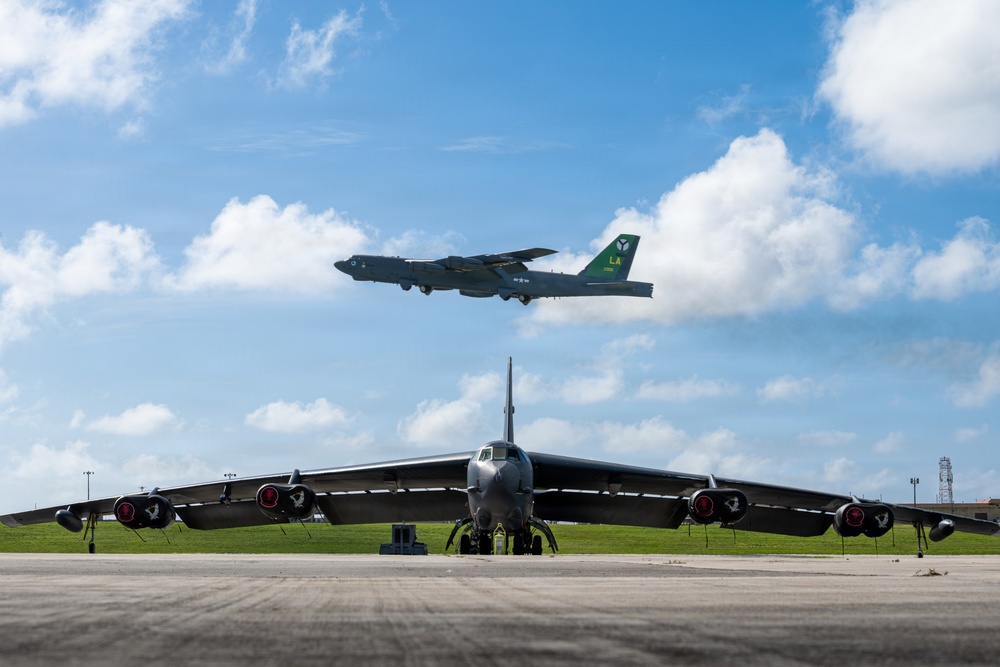
The Department of Defense confirmed on Wednesday that the transfer of the first Virginia-class nuclear-powered submarine to Australia remains on schedule for late 2027, despite persistent concerns from members of the Senate Armed Services Committee about the impact on the U.S. Navy's own submarine fleet.
Under the AUKUS agreement signed in 2021, Australia will acquire three to five Virginia-class attack submarines from the United States in the early 2030s, as a bridge to a jointly developed SSN-AUKUS class boat expected to enter service in the 2040s. The first transfer, a used boat from the existing fleet rather than a new-build, is now 18 months away.
Congressional Resistance
The transfer requires congressional approval under the Arms Export Control Act, and that approval is far from guaranteed. A bipartisan group of senators, led by Roger Wicker of Mississippi and Jack Reed of Rhode Island, has conditioned their support on certification that the transfer will not reduce the U.S. submarine fleet below the Navy's stated minimum requirement of 66 attack submarines.
The Navy currently operates 49 attack submarines. The fleet is projected to shrink to 46 by 2030 before new construction begins to close the gap, assuming the Virginia-class production rate reaches the planned two boats per year, which it has not yet achieved.
"I support AUKUS. I support Australia," Wicker said at a hearing last month. "What I do not support is giving away submarines we do not have to spare."
The Strategic Case
AUKUS proponents argue that the strategic logic is compelling. Australia's geographic position, straddling the sea lanes between the Indian and Pacific oceans, makes it a critical node in any Indo-Pacific defense architecture. A nuclear-powered submarine operating from Perth can reach the South China Sea in days, providing a capability that conventional submarines cannot match.
The alliance also deepens interoperability between the three AUKUS partners at a level that goes far beyond the submarine itself. Shared nuclear propulsion technology creates industrial, intelligence, and operational ties that bind the three navies together for decades.
"This is not a transaction. It is an investment in an alliance structure that will endure for 50 years," said a senior Pentagon official who briefed reporters on condition of anonymity.
The Production Question
The fundamental tension in AUKUS has always been production capacity. The United States is building approximately 1.2 Virginia-class submarines per year against a plan of 2. The gap is driven by workforce shortages at the two submarine yards (General Dynamics Electric Boat in Groton, Connecticut, and Huntington Ingalls Newport News in Virginia) and by the simultaneous demand of the Columbia-class ballistic missile submarine program.
Transferring boats from the existing fleet to Australia while domestic production lags behind demand creates a mathematical problem that no amount of strategic logic can resolve. The Navy's answer, that accelerated production will close the gap by the mid-2030s, requires a sustained investment in shipyard capacity and workforce development that has been promised before but never delivered at scale.
Australia, for its part, is investing $4.6 billion in the U.S. submarine industrial base as part of AUKUS, funding shipyard upgrades, workforce training, and supplier development. Whether this investment changes the production math in time remains the open question at the center of the alliance.
Related Stories

Muscat Round 3 Ends Without Framework Agreement
The third round of indirect U.S.-Iran talks ended in Muscat on Friday morning without the framework agreement Witkoff had been seeking. The Iranian delegation departed for Tehran.
May 15, 2026 · 5 min read

U.S. Destroyer Confronts Iranian Fast Boats in Hormuz
The USS Truxtun drove off four Iranian fast boats approaching a Liberian-flagged tanker in the central Strait on Saturday, in the most serious non-kinetic confrontation since the blockade began.
May 9, 2026 · 6 min read

Witkoff Is in Muscat for the Third Round of Iran Talks
Special Envoy Steve Witkoff arrived in Muscat on Sunday morning aboard a commercial Emirates flight from Dubai, joining Iranian Foreign Minister Abbas Araghchi in a city where the Sultan's protocol forbids public confirmation of negotiations until both sides authorize disclosure, and where the substantive work of the third round of indirect U.S.-Iran talks has now begun under conditions that neither government would publicly acknowledge for several days.
May 4, 2026 · 7 min read